Gusto increases ROAS by 73% with offline conversion tracking and Smart Bidding
127%
Conversion rate
73%
Return on AD spend
30%
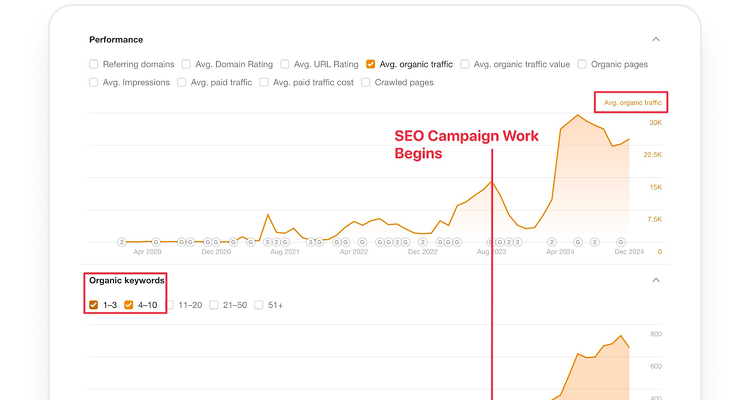
Increase in Position 1 Rankings
Overview
Gusto is an all-in-one people platform that helps growing businesses hire, pay, and support their teams — combining payroll, benefits, time tracking, and HR tools in one modern system.
Gusto is a modern, online people platform that helps small businesses take care of their teams. On top of full-service payroll, Gusto offers health insurance, 401(k)s, expert HR, and team management tools. To maximize high-value conversions and increase their return on ad spend (ROAS), they incorporated their lifetime value (LTV) model into a third-party automated bidding solution, but weren’t seeing significant results.
The Approach
Gusto began importing LTV into Google Ads through offline conversion tracking (OCT), enabling them to attribute projected revenue to clicks in Google Ads. Then, they unlocked the full value of data integration and automation through Smart Bidding. Because Gusto was already using a third-party bidding solution, they chose drafts and experiments to split budgets on select campaigns into control and test groups, incorporating LTV data with Google’s machine learning.
Methods
Step-by-step, we refined each channel to deliver smarter, more efficient growth.
META
On Meta ads we implemented two strategies A/B testing each to see what would perform best for the client:
Sending Meta ad traffic to a website form with a Calendly link for booking a cal
Sending Meta ad traffic to an in-app Meta form with a Calendly link for booking a call
We quickly found that Meta in-app forms were driving a far lower cost per lead and cost per booked call, resulting in more direct calls booked
The lower lead cost also allowed us to accrue a large amount of interested potential customers that we would retarget via email follow up.
Our Meta in-app form also was easier to iterate upon than a website form since it did not require a web dev and massive website landing page updates.
Google
On Google we launched a combination of Google brand search, non-brand search, and Pmax.
We quickly found that Google was not generating the same kind of response that Meta was, and as a result, we scaled back our Google efforts to focus on brand search to help protect our brand landscape and to ensure we were top of search results when Meta users googled the brand name spilling over into search results.
“Google Smart Bidding took our Search program to the next level. With such strong ROAS, we’re able to reach more high-potential customers and provide valuable services during moments that matter.”
Stephanie Nicol
Head of Marketing at Irrigreen
How We Did It
After a six-week test period, the campaigns drove a 127% increase in conversion rate, resulting in a 45% improvement to ROAS. Gusto then migrated all campaigns to Smart Bidding, which drove a 73% increase in non-brand campaign ROAS and +21% ROAS in branded campaigns.